Legacy of the Incas
Machu Picchu Luxury Tours
Peru:
Machu Picchu - Lake Titicaca
(11 days/10 nights)
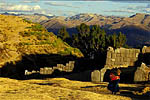
Machu Picchu Luxury Tours
Peru:
Machu Picchu - Lake Titicaca
(12 days/11 nights)
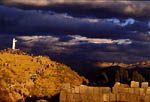
Empire of the Sun
Machu Picchu Luxury Tours
Peru:
Machu Picchu - Lake Titicaca
(14 days/13 nights)
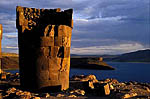
Ancient Civilizations of Peru
Machu Picchu Luxury Tours
Peru:
Colca Canyon - Machu Picchu
Lake Titicaca
(16 days/15 nights)
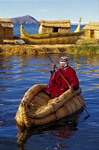
Archaeological & Ecological
Treasures
Machu Picchu Luxury Tours
Peru & Ecuador:
Galapagos - Machu Picchu
Lake Titicaca (or Amazon)
(18 days/17 nights)
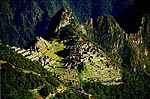
Grand Tour of the Inca Empire
Machu Picchu Luxury Tours
Peru:
Colca Canyon - Amazon
Machu Picchu- Lake Titicaca
(22 days/21 nights)
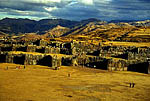
Ancient & Colonial Capitals
Machu Picchu Luxury Tours
Peru:
Machu Picchu
(10 days/9 nights)
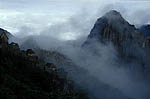
Inca Trail to Machu Picchu
Machu Picchu Luxury Tours
Peru:
Machu Picchu
(13 days/12 nights)
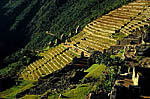
Machu Picchu & Galapagos
Machu Picchu Luxury Tours
Peru & Ecuador:
Machu Picchu - Galapagos
(15 days/14 nights)
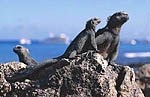
Galapagos & Machu Picchus
Machu Picchu Luxury Tours
Ecuador & Peru:
Galapagos - Machu Picchu
(18 days/17 nights)
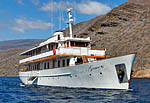
Enchanted Isles of the Galapagos
Machu Picchu Luxury Tours
Ecuador:
Galapagos
(11 days/10 nights)
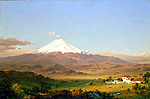
Galapagos & the Kingdom of Quito
Machu Picchu Luxury Tours
Ecuador:
Galapagos - Andes
(16 days/15 nights)
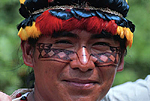
Galapagos & the Amazon
Machu Picchu Luxury Tours
Ecuador:
Galapagos - Amazon
(16 days/15 nights)
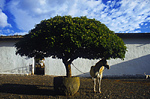
Historic Haciendas of the Andes
Machu Picchu Luxury Tours
Ecuador:
Cotopaxi - Antisana - Otavalo
(7 days/6 nights)
© 2013 Inka's Empire Corporation.
All rights reserved.
Lima - Sacred Valley - Machu Picchu - Cuzco
Machu Picchu Luxury Tours

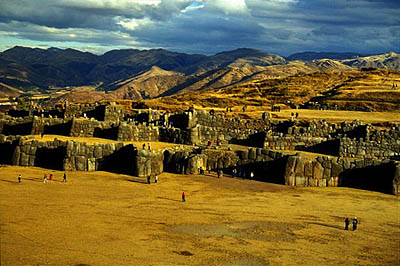
Temple and fortress of Saqsaywaman, Cuzco.
Photo: Mylene d'Auriol Stoessel. Machu Picchu Luxury Tours.
Ancient and alluring: the Incan and colonial capitals of Peru...
-- Kimberly Fay, LuxuryLink.com
Land Price (9 days/8 nights)
Frugal Luxury US$ 5,870 De Luxe US$ 6,885 Imperial US$ 7,970 per person
The land price includes escorted transfers, private excursions with professional guides and chauffeurs, entrance fees, selected category of accommodations, gourmet cuisine, all land and water transportation, and travel insurance for guests through the age of 59 years (over that age, there is a supplementary fee). All prices are per person based on two people sharing a guest room. For a detailed description of our services, see Opulent Itineraries.
Map
Intra-Tour Flights & Fares
Air fares are in addition to the land price.
Lima - Cuzco - Lima: US$ 550 per person
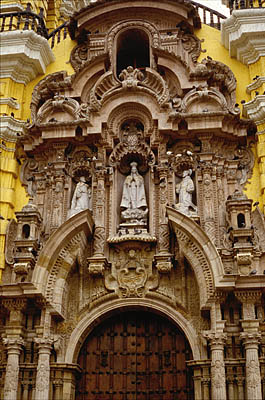
Facade, La Iglesia y Convento de San Francisco, Lima.
Photo: Mylene d'Auriol Stoessel. Machu Picchu Luxury Tours.
In the imperial city of Cuzco, fabled Machu Picchu and the Sacred Valley; you will experience the glory of the Inca Empire. Archaeology, art, architecture, folklore and cuisine compose a cultural adventure to forever cherish.
All international flights arrive in Lima, a five-century-old Spanish colonial city and home to the country's major museums. The next morning, enter the historic district's crown jewels. In the afternoon, discover the treasures of the Incas at the Museo Larco.
A morning flight into the Andes takes you to Cuzco, the ancient capital, where you will have one day to explore its Inca and colonial monuments, two days in the "Lost City" of Machu Picchu, with a chance to hike a part of the Inca Trail, and two days for the reknowned archaeological sites and native markets of the Sacred Valley of the Incas.
Return to Lima to explore the Pachacamac archaeological site. After a lunch of artistic cuisine by chef Rafael Osterling, walk in the artists' quarter of Barranco, have a farewell drink and transfer to the airport for your overnight flight home, completing your tour of ancient and colonial capitals.
What Luxury Link has to say about Ancient & Colonial Capitals.
A Paracas Necropolis "manto", c. 500 BC.
Museo Nacional de Arqueologia, Antropologia e Historia del Peru.
Photo: Mylene d'Auriol Stoessel. Machu Picchu Luxury Tours.
Highlights
Lima
Day 1: Flight to Lima. International arrival in the afternoon or evening, reception and transfer to your hotel. Overnight in the Orient-Express Miraflores Park.
Day 2: Lima. Morning walking tour in the colonial quarter, visiting the Plaza de Armas and entering La Casa de Aliaga and La Iglesia y Convento de San Francisco. View the exterior of La Iglesia y Convento de Santo Domingo, Lima's oldest convent, and enter La Catedral for a short visit. In contrast to the religious structures, the Torre Tagle Palace is the city's best surviving example of secular colonial architecture. Lunch at the Café del Museo. Afternoon at the Museo Larco. Dine at Astrid & Gastón, one of the highest notes in the Peruvian culinary scene. Overnight in the Orient-Express Miraflores Park.
Sacred Valley
Day 3: Lima - Cuzco - Sacred Valley (Chinchero). Transfer to the airport. Flight to Cuzco. Reception and drive to the Sacred Valley of the Incas. Visit to the Chinchero market and church. Private weaving demonstration. Continue to the Moray archaeological site and the ancient salt pans of Maras. Chef-prepared picnic lunch. If you like, walk down rural paths to the Urubamba River. Arrival at your hotel. At a nearby hacienda, an honored shaman will conduct an ancient ceremony still observed by the indigenous people of Peru to obtain health, well-being and luck. After this memorable experience, you will return to your hotel. Dinner and overnight in the Orient-Express Rio Sagrado.
Day 4: Sacred Valley (Pisaq - Ollantaytambo). After a short visit to the Pisaq market, hike in the Pisaq ruins. Lunch at 3 Keros. Tour of the Ollantaytambo ruins. Dinner and overnight in the Orient-Express Rio Sagrado.
Machu Picchu
Day 5: Sacred Valley - Orient-Express Vistadome - Machu Picchu. Transfer to the train station to meet your guide. Vistadome to Machu Picchu. Transfer to the ruins. Day entrance. Buffet luncheon. Private guided tour in the afternoon. Dinner and overnight in the Orient-Express Sanctuary Lodge.
Cuzco
Day 6: Machu Picchu - Orient-Express Vistadome - Cuzco. Entrance into the ruins. Sunrise over Machu Picchu. Morning exploration with your guide or on your own. Lunch in the hotel. Afternoon exploration with your guide or on your own. Transfer to the train station. Vistadome to the Poroy Station, on the outskirts of Cuzco. Reception and transfer to your hotel. Dinner at the Restaurante El Tupay. Overnight in the Orient-Express Monasterio.
Day 7: Cuzco (Inca Monuments). Morning drive to Awana Kancha, where you will see all four species of South American camelid. Proceed to the nearby Inca monuments of Tambomachay, Puka Pukara, Qenqo and Saqsaywaman. Lunch at Pacha Papa before a visit to an artisan's workshop and the Church of San Blas. Afternoon walk to Inca monuments in the colonial quarter, including the Stone of Twelve Angles, Huacaypata (now called the Plaza de Armas and dominated by the Spanish colonial Cathedral), the fine Inca walls of Inti Q'ijllo, Ajlla Wasi (House of the Virgins of the Sun) and Qorikancha (Temple of the Sun). This evening, you will see pre-Inca and Inca art at the Museo de Arte Precolombino, with a dinner of nouvelle Andean cuisine in the courtyard. Overnight in the Orient-Express Monasterio.
Lima
Day 8: Cuzco - Lima. Transfer to the airport. Flight to Lima. Arrival, reception and transfer to your hotel. Morning drive to Pachacamac, the most reknowned pre-Inca and Inca pilgrimage site of the coast. Upon returning to Lima, lunch at the extraordinary Huaca Pucllana restaurant, which reinterprets the Peruvian Criollo tradition. Afterward, continue to Barranco for visits to one of the country's finest crafts shops, the Museo de Arte Colonial Pedro de Osma, La Puente de los Suspiros and La Iglesia de La Ermita. After arrival back at the hotel, have a farewell drink, order from room service or just rest before the transfer to the airport for your Overnight Flight Home. Relax in the VIP Club while awaiting departure and enjoy a buffet of light fare and beverages, including Peru's famous pisco sour. Day Room in the Orient-Express Miraflores Park.
Home
Day 9: Lima - Home. Flight and arrival home.
Details

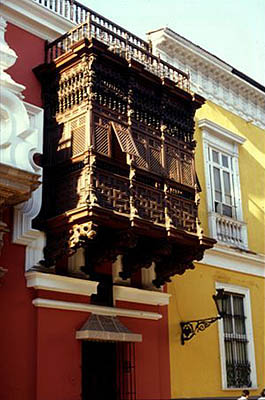
Wooden balcony of the Torre Tagle Palace, Lima.
Photo: Mylene d'Auriol Stoessel. Machu Picchu Luxury Tours.
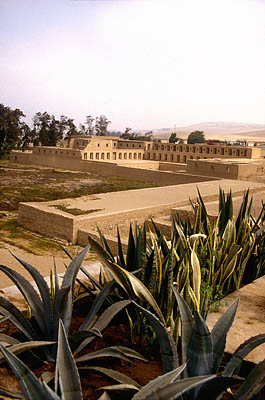
At ancient Peru's most exalted pilgrimage site, eroded temples speak of the pre-Columbian cultures that worshipped the earth god Pachacamac ("he who gives life to the universe"). When the Incas arrived, they respected the temples and religion of those people, allowing them to worship that god alongside the Incas' own god, the Sun. For their deity, the Incas erected a great stone temple on a cliff above the sea. When the Spaniards arrived, they destroyed the holiest place in their lust for gold but found that the only treasure it contained was spiritual.
Nearby Lima, founded by the conquistador Francisco Pizarro in 1535, came to be the capital of the New World for a period of three years. It reached its grandest splendor in the 17th and 18th centuries. The city has two principal attractions: the colonial quarter, where a visit to La Casa de Aliaga is to go back in time to the earliest years of the Spanish conquest, and the archaeological museums, which display gold, ceramic and textile masterpieces of Peru's pre-Inca and Inca civilizations. The country's independence movement was led by Jose de San Martin of Argentina and Simon Bolivar of Venezuela. San Martin proclaimed Peruvian independence from Spain on July 28, 1821, marking the end of the colonial period and the beginning of the republican era.
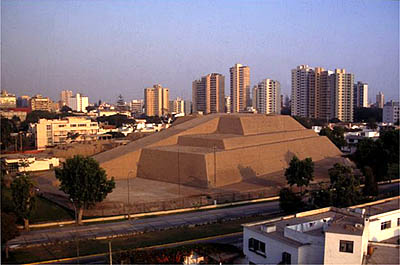
Huaca de Huallamarca, Lima.
Photo: Mylene d'Auriol Stoessel. Machu Picchu Luxury Tours.
Day 1: Flight to Lima
International arrival this afternoon or evening in the five-century-old colonial city of Lima, "City of the Kings" and the capital of Peru. Reception and escorted transfer to your hotel in the garden district of Miraflores, high above the Pacific Ocean and home to the city's grand 19th century mansions. Overnight in the Orient-Express Miraflores Park.
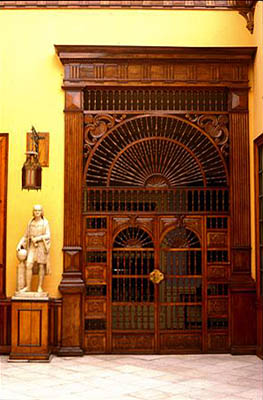
Entry door of the Casa Aliaga, Lima.
Photo: Mylene d'Auriol Stoessel. Machu Picchu Luxury Tours.
Day 2: Lima
Breakfast. This morning, walk with your guide in the heart of the city, which preserves its Spanish colonial heritage of the 16th-18th centuries. It was Francisco Pizarro, the founder of Lima, who determined the area for the Plaza de Armas as well as the location of the structures around it. In the center of the plaza is a splendid bronze fountain of 1650. Around the plaza and originally dating back to the city's beginnings in 1535 are the Cathedral, destroyed in the earthquake of 1746 and rebuilt in 1758; the Archbishop's Palace, rebuilt in 1924; and the Presidential Palace, rebuilt in 1937. Surviving intact is La Casa de Aliaga. Built in 1535 by Don Jeronimo de Aliaga, a member of Pizarro's conquering forces and co-founder of the city, it is still inhabited by the original family. Your visit to this antique-filled mansion is to go back in time to the earliest years of the Spanish conquest of Peru.
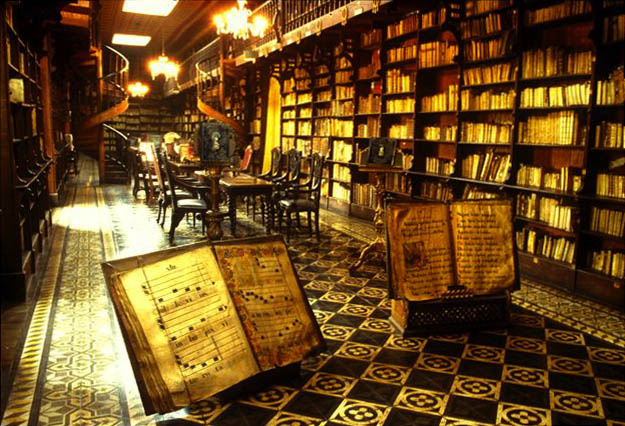
17th century library, La Iglesia y Convento de San Francisco, Lima.
Photo: Mylene d'Auriol Stoessel. Machu Picchu Luxury Tours.
On your walking tour, enter the 1674 La Iglesia y Convento de San Francisco, the most spectacular of Lima's colonial-era churches. It features cloisters and interiors of Spanish tiles; Moorish-style, carved-wood ceilings; a fine museum of religious art; a 17th century library of twenty-thousand books, many dating from the first years of the city's founding; and catacombs begun in 1546. View the exterior of the 1599 La Iglesia y Convento de Santo Domingo, Lima's oldest convent, and enter the 1758 La Catedral for a short visit. In contrast to the religious structures, the 1735 Torre Tagle Palace, with its gorgeous baroque stone doorway and carved-wood balconies, is the city's best surviving example of secular colonial architecture.
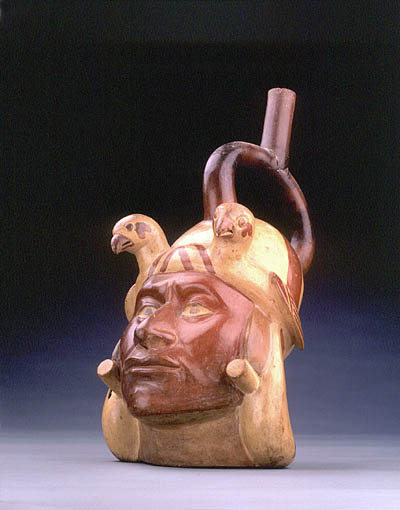
Mochica, 500 AC.
Photo: Museo
Larco, Lima, Peru. Machu Picchu Luxury Tours.
Lunch of traditional Peruvian cuisine at the Café del Museo, located in the gardens of the Museo Larco and directed by Peru's most prestigious chef, Gastón Acurio. Founded in 1926, the Museo Larco exhibits the world's largest private collection of pre-Columbian art -- a treasure trove of gold, silver, semi-precious stones and textiles. The collection's predominant strength is in Mochica ceramics, of which the erotic ones are the most famous. Their notariety ought not to obscure the fact that the museum presents a complete view of the cultural development of ancient Peru through a selection of its 45,000 pieces, housed in a colonial building of the 18th century.
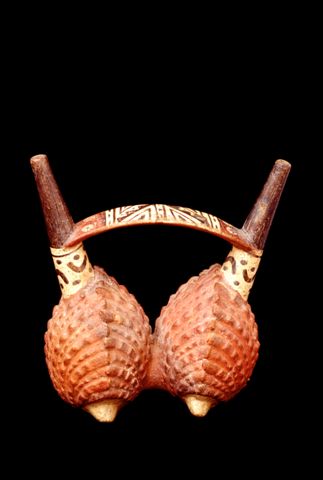
"Huaco" depicting Spondylus shells, Northern Huari culture, c. 800 AD.
Museo Larco, Lima. Photo: Mylene d'Auriol Stoessel. Machu Picchu Luxury Tours.
Return to your hotel to relax. This evening, dine at Astrid & Gastón. When the restaurant was founded a decade ago by Gastón Acurio and Astrid Gutsche, the restaurant's cuisine was largely French. Both chefs had studied in Paris' Le Cordon Bleu. Gradually, though, as they rediscovered Peruvian flavors and culinary traditions, the kitchen began to incorporate local dishes and ingredients, moving towards the current sophisticated Criollo concept that characterizes the restaurant today and makes it one of the highest notes in the Peruvian culinary scene. Overnight in the Orient-Express Miraflores Park.
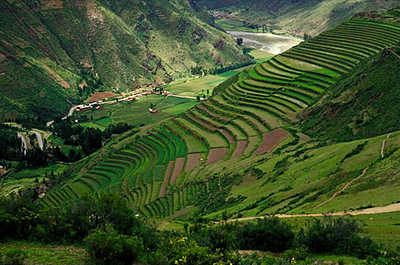
Terraces of Pisaq, Sacred Valley.
Photo: Mylene d'Auriol Stoessel. Machu Picchu Luxury Tours.
But the favorite residence of the Incas was at Yucay, about four leagues distant from the capital. In this delicious valley, locked up within the friendly arms of the sierra, which sheltered it from the rude breezes of the east, and refreshed by gushing fountains and streams of running water, they built the most beautiful of their palaces. Here, when wearied with the dust and toil of the city, they loved to retreat, and solace themselves with the society of their favorite concubines, wandering amidst groves and airy gardens, that shed around their soft, intoxicating odors, and lulled the senses to voluptuous repose. Here, too, they loved to indulge in the luxury of their baths, replenished by streams of crystal water which were conducted through subterraneous silver channels into basins of gold. The spacious gardens were stocked with numerous varieties of plants and flowers that grew without effort in this temperate region of the tropics, while parterres of a more extraordinary kind were planted by their side, glowing with the various forms of vegetable life skilfully imitated in gold and silver! Among them the Indian corn, the most beautiful of American grains, is particularly commemorated, and the curious workmanship is noticed with which the golden ear was half disclosed amidst the broad leaves of silver, and the light tassel of the same material that floated gracefully from its top.
-- William H. Prescott, The History of the Conquest of Peru, 1847
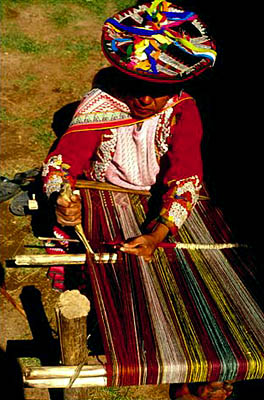
Weaver of Chinchero, Sacred Valley.
Photo: Mylene d'Auriol Stoessel. Machu Picchu Luxury Tours.
Day 3: Lima - Cuzco - Sacred Valley (Chinchero)
Breakfast. Early transfer to the airport for the flight to Cuzco, the capital of the ancient Inca Empire, called Tawantinsuyo. The name of Cuzco is a Spanish version of the native word Q'osqo, which means the "Navel of the Universe". Arrival, reception and drive to the Sacred Valley of the Incas. On the way, visit Chinchero, the birthplace of the rainbow, according to Inca legend. The village is on the altiplano, or highlands, above Cuzco and the Sacred Valley, at an elevation of 12,340 feet, and rises against a superb Andean landscape dominated by eternally snow-capped peaks. This late 15th century agricultural center maintains its Inca traditions, one being its composition of "ayllus", or groups of indigenous, related families that work communally in the cultivation of their fields.
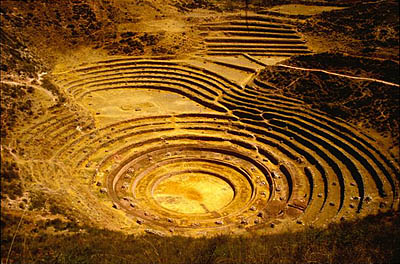
Sunken agricultural terraces of Moray, Sacred Valley.
Photo: Mylene d'Auriol Stoessel. Machu Picchu Luxury Tours.
Traditional weaving is preserved, in part, through the efforts of The Center for Traditional Textiles of Cusco, which has arranged a private demonstration by one of the finest weavers. Another tradition that traces it roots back to the Incas is the barter, or "trueque", market. In Chinchero, people still meet to trade good for goods, just as in ancient times, when money did not exist. The market, noted for its textiles, takes place in the main square, at the foot of an Inca wall. Such traditions are not unique to Chinchero; they still exist throughout the altiplano of Peru. The pueblo exhibits a peculiar Andean-Hispanic architectural style, and paintings by the famous native artist Chiwantito hang in a beautiful colonial church. The canvases are in the Cuzqueña style, dating back to the early Spanish period.
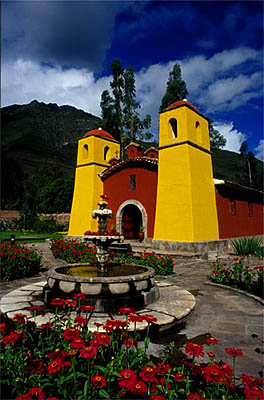
Yucay Church, Sacred Valley.
Photo: Mylene d'Auriol Stoessel. Machu Picchu Luxury Tours.
Afterward, visit the impressive archaeological site of Moray. These circular terraces were built by the Incas in natural sinkholes on a limestone plateau overlooking the Sacred Valley and, according to experts, were used to grow crops in different microclimates. Nearby, below the colonial town of Maras, are age-old, terraced salt mines. At a scenic place along the route, we'll set up a table and chairs for a picnic lunch prepared by chef Tatiana Mendoza of Cuzco. If you like, take a three-quarter-hour walk down rural paths to the Urubamba River, where your driver and car will be waiting. Arrival at your hotel, the gracious Rio Sagrado, on the banks of the Urubamba, the Inca's sacred river.
Traditional healer's ceremony.
Photo: Kerry Chirinos. Machu Picchu Luxury Tours.
At a nearby hacienda, an honored shaman will conduct an ancient ceremony still observed by the indigenous people of Peru. To perform this ritual, the shaman, Hubert Lazarte, gathers such traditional items as coca leaves and wine for a simple offering. Each participant selects three coca leaves and chews them while making wishes for health, well-being and luck, then adds the leaves to the tribute, which includes medicinal and aromatic plants. The shaman prays in the Inca language of Quechua, asking Pacha Mama (Mother Earth) and the Apus (mountain spirits) to grant the wishes as he burns the offering on an altar before burying it in the earth. After this memorable experience, you will return to your hotel. For dinner, executive chef Federico Ziegler presents a delicious fusion of Urubamba’s best kept culinary secrets, Peruvian traditional zest and international delicacies. Dinner and overnight in the Orient-Express Rio Sagrado.
Ruins of Pisaq surrounding the solar calendar, Sacred Valley.
Photo: Mylene d'Auriol Stoessel. Machu Picchu Luxury Tours.
Day 4: Sacred Valley (Pisaq - Ollantaytambo)
Breakfast. Drive through along the Urubamba River to the colonial town of Pisaq, where a popular handicraft fair take place under the main square's century-old tree, with wares displayed on vividly patterned and colored textiles. On Sundays, the traditional mass is held in Quechua, the Inca language, at the local church, which is attended by the village leaders from the surrounding communities. They wear their typical costumes and carry their traditional scepter of authority, or vara, that gives origin to their name of Varayoc.
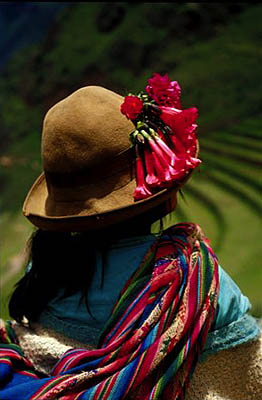
Girl of Pisaq adorned in traditional attire and cantuta flowers, Sacred Valley.
Photo: Mylene d'Auriol Stoessel. Machu Picchu Luxury Tours.
High on a mountain above, tower the imposing remains of an ancient settlement. The Pisaq ruins take up the entire mountain and are made up of different neighborhoods, or squares, the main one being Intihuatana, which is admired for the architectural skill of its constructions. Its central feature is a monumental solar calendar on a promontory from which there are spectacular outlooks. At the same time, the pre-Hispanic cemetery is of great interest, as it is the largest found in this part of the continent, containing thousands of tombs, some of them looted. Pisaq also is famous for the colossal terraces that circle the mountains and the fabulous watchtowers, which were used as observation points as well as for control and military defense.
Fortress of Ollantaytambo, Sacred Valley.
Photo: Mylene d'Auriol Stoessel. Machu Picchu Luxury Tours.
A lunch of nouvelle Andean cuisine by chef Ricardo Behar at 3 Keros. El Huacatay and 3 Keros fight for the title of the best restaurant in the Sacred Valley. The two restaurants greatly elevate the gastronomic offering of the valley.

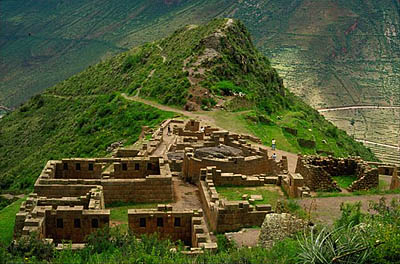

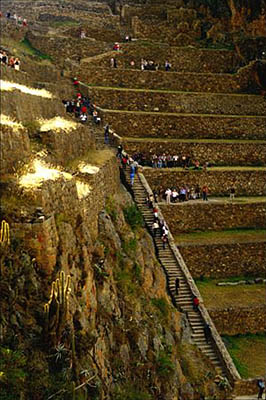
Agricultural terraces, Fortress of Ollantaytambo, Sacred Valley.
Photo: Mylene d'Auriol Stoessel. Machu Picchu Luxury Tours.
Continue to the Ollantaytambo archeological site, a gigantic agricultural, administrative, social, religious and military center in the era of Tawantinsuyo. According to legend, the fortress belonged to a powerful lord, Ollantay, who fell in love with Princess Cusi Coillor, daughter of Inca Pachakuteq. It later served Manco Inca after his defeat by the Spaniards at Saqsaywaman.The architectural style of its streets and squares reflects Inca town planning, with enormous polyhedral stones forming the walls and trapezoidal doorways of temples and palaces set along rectilinear and narrow streets, which have been inhabited continuously since Inca times.
Incan town of Ollantaytambo, Sacred Valley.
Photo: Mylene d'Auriol Stoessel. Machu Picchu Luxury Tours.
Above the town, a mountain rises which houses innumerable Inca constructions, such as magnificently-crafted temples and terraces. One striking construction is the partially-destroyed main temple, believed to be the Temple of the Sun, whose carved-stone facade is made up of six perfectly-sculpted, red monoliths. The mountainside on which this enormous fortress is built is strategic: it dominates three valleys that come together at this point. Across one valley, tremendous blocks of stone lie abandoned along the route from the quarry site to Ollantaytambo, their uncompleted journey marking the arrival of the "Conquistadores". Return to your hotel. Dinner and overnight in the Orient-Express Rio Sagrado.
Citadel of Machu Picchu.
Photo: Mylene d'Auriol Stoessel. Machu Picchu Luxury Tours.
Arrive like the Inca!
Consider an unforgettable arrival on the Royal Inca Trail
(Trek must be requested in writing at the time of booking your tour.)
Photo album: Marvels of Machu Picchu
Day 5: Sacred Valley - Orient-Express Vistadome - Machu Picchu
Breakfast. Early transfer to the station to meet your guide and board the train for a descent into the Urubamba Valley to reach Machu Picchu (Old Peak), the "Lost City of the Incas". The Orient-Express Vistadome's recently renovated carriages have panoramic windows, offering enhanced photographic opportunities. Refreshments will be served. Upon arrival, your guide will accompany you to the Orient-Express Sanctuary Lodge, near the top of Machu Picchu and next to the ruins.

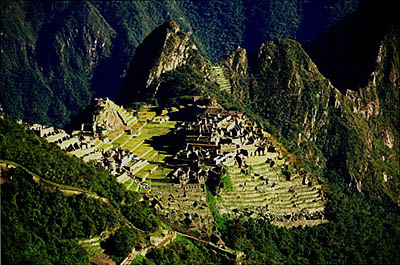
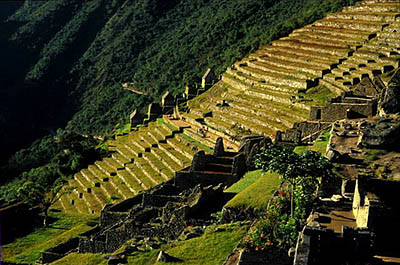
Agricultural terraces,
Machu Picchu.
Photo:
Mylene d'Auriol Stoessel. Machu Picchu Luxury Tours.
A sumptuous buffet luncheon of regional cuisine by chef Paulino Huaman at the Sanctuary Lodge's Tinkuy Restaurant. On your private tour this afternoon, you will ponder the many theories about this mysterious citadel, including the latest -- that it was Inca Pachacuti's winter palace. The word "ruins" is misleading, as the site is actually in a remarkable state of preservation -- only the wood and palm-frond roofs have decomposed over the centuries. Surprisingly, the Spaniards never discovered the sanctuary, and it remained unknown to the outside world until Hiram Bingham's expedition of 1911. Its discovery captured the world's imagination, and its allure has never diminished.
Walk back to the hotel. From its terrace and nearby lookouts, you will be able to watch the sunset, southern constellations and sunrise over the citadel, from high above the canyon of the Urubamaba River. A gourmet dinner of Peruvian-Mediterranean cuisine by chef Huaman at the Sanctuary Lodge's Tampu Restaurant. Overnight in the Orient-Express Sanctuary Lodge.
Trapezoidal windows, Machu Picchu.
Photo: Mylene d'Auriol Stoessel. Machu Picchu Luxury Tours.
The temples and royal chambers, throughout the Empire, were lined with gold, and, in preparing the stone, they left niches and empty spaces in which to put all sorts of human or animal figures: birds, or wild beasts, such as tigers, bears, lions, wolves, dogs and wildcats, deer, guanacos, vicuñas and even domestic ewes, all of which were made of gold and silver...
Imitation of nature was so consummate that they even reproduced the leaves and little plants that grow on walls; they also scattered here and there, gold or silver lizards, butterflies, mice and snakes, which were so well made and so cunningly placed, that one had the impression of seeing them run about in all directions...
In all the royal mansions there were gardens and orchards given over to the Inca's moments of relaxation. Here were planted the finest trees and the most beautiful flowers and sweet-smelling herbs in the kingdom, while quantities of others were reproduced in gold and silver, at every stage of their growth, from the sprout that hardly shows above the earth, to the full-blown plant, in complete maturity. There were also fields of corn with silver stalks and gold ears, on which the leaves, grains, and even the corn silk were shown.
In addition to all this, there were all kinds of gold and silver animals in these gardens, such as rabbits, mice, lizards, snakes, butterflies, foxes, and wildcats... Then there were birds set in the trees, as though they were about to sing, and others bent over the flowers, breathing in their nectar. There were roe deer and deer, lions and tigers, all the animals in creation, in fact, each placed just where it should be.
-- Garcilaso de la Vega, The Royal Commentaries of the Inca, 1609
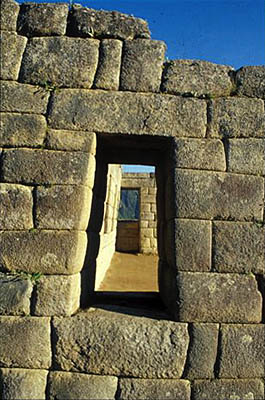
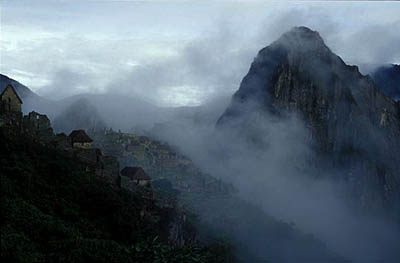
Machu Picchu, the Lost City of the Incas.
Photo: Mylene d'Auriol Stoessel. Machu Picchu Luxury Tours.
Day 6: Machu Picchu - Orient-Express Vistadome - Cuzco
Breakfast. Entrance into the ruins. Day of exploration with your guide or on your own. Start by ascending Machu Picchu for sunrise, which due to the high, surrounding mountains does not occur until around 7:00 am. It takes an hour to walk up to Intipunku (Sun Gate), the end of the Inca Trail and the ancient entrance into the sanctuary. Its majestic panorama of the citadel, seen from on high, is the first view the Incas had upon arriving from Cuzco. Other memorable hikes lead to the top of Huayna Picchu (a strenuous, two-hour round-trip), the Temple of the Moon (a moderate, four-hour round-trip), the Inca Drawbridge (an easy, one-hour round-trip) and Machu Picchu's multitude of hidden nooks and crannies.
A lunch by chef Huaman at the Tampu Restaurant. Descend from Machu Picchu at mid-afternoon and walk to the station for the train departure. Evening arrival at the Poroy Station, on the outskirts of Cuzco, reception and transfer to your hotel. A dinner of inspired dishes influenced by French cuisine and created with local produce of the highest quality by executive chef Federico Ziegler at the Restaurante El Tupay. Overnight in the Orient-Express Monasterio.
Ritual fountains of Tambomachay, Cuzco.
Photo: Mylene d'Auriol Stoessel. Machu Picchu Luxury Tours.
Day 7: Cuzco (Awana Kancha - Inca Monuments)
Breakfast. This morning, see all four species of South American camelid -- the llama, alpaca, vicuña and guanaco -- at Awana Kancha, a living museum of Andean culture. From Awana Kancha, drive to the nearby Inca monuments of Tambomachay, Puka Pukara, Qenqo and Saqsaywaman. Tambomachay is believed to have been dedicated to the worship of water and its aqueducts are fed by springs all year long. The site includes a liturgical fountain and three terraces with structures made from polyhedral blocks of stone, joined without mortar. The setting is bucolic and the spring water is cold, pure and delicious. Drink from the sacred fountain and make your devotions to one of life's essential elements.
Puka Pukara (red fortress) is located at a strategic point along the road to Antisuyo (the jungle quarter of the Inca Empire). It served as a checkpoint and was a military and administrative center. The Inca's retinue received food and lodging here when he stopped at Tambomachay, on his way to the Sacred Valley.
Qenqo is a vast, rocky hilltop carved into staircases, holes and channels, probably built to store the chicha (fermented maize beer) used in Inca rituals. The site features a semi-circular patio studded with several large niches surrounding a stone figure embedded within a chamber, rather like an idol inside its own shrine.
Temple and fortress of Saqsaywaman, Cuzco.
Photo: Mylene d'Auriol Stoessel. Machu Picchu Luxury Tours.
To truly appreciate fortress of Saqsaywaman, one must realize that what may now be seen is only the base of a colossal construction of a series of three successively-higher, defensive structures made from enormous blocks of stone, joined together with great precision.
Inside this triple enclosure, three tall towers were erected on a large narrow ground. The largest of them was called Mayac Marca, which means the round tower. It was built over a clear, abundant spring, fed by underground canalizations, concerning which nobody knew from where or how they came... This round tower contained rooms with gold and silver paneled walls, on which animals, birds, and plants figured in relief, as though in a tapestry. It was here that the king lived when he came for a rest in the fortress...
The two other towers, which were round, not square, in shape, were called Paucar Marca and Sacllac Marca, and were used to house soldiers of the garrison, which was composed only of Incas by privilege, ordinary men, even combatants, not being allowed inside this fortress, which was the house of the Sun, both its arsenal and its temple...
An underground network of passages, which was as vast as the towers themselves, connected them with one another. This was composed of a quantity of streets and alleyways which ran in every direction, and so many doors, all of them identical, that the most experienced men dared not venture into this labyrinth without a guide, consisting of a long thread tied to the first door, which unwound as they advanced....
It would have been in the interest of the Spaniards to maintain this fortress, and even to repair it at their own expense, because, quite alone, it gave proof of the grandeur of their victory and would have served as a witness to it for all eternity. And yet, not only did they not keep it up, but they hastened its ruin, demolishing its hewn stones, in order to construct their own Cuzco homes at less cost.
They made their portals and thresholds with the big flat stones that formed the ceilings, and to make their stairways, they did not hesitate to tear down entire walls, provided they were based on a few stones that could be used for steps.
And so, that is how the Spaniards destroyed the Cuzco fortress.
-- Garcilaso de la Vega, The Royal Commentaries of the Inca, 1609
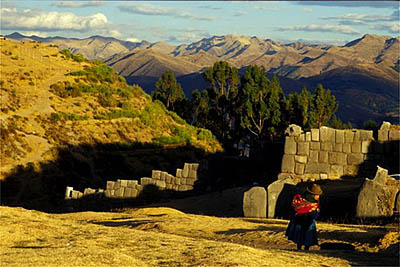
Campesina at Saqsaywaman, Cuzco.
Photo: Mylene d'Auriol Stoessel. Machu Picchu Luxury Tours.
Saqsaywaman was considered a fortress by the Spaniards, since it was a place of defense, weapons and war. It was considered the House of the Sun by the Incas because, at the same time, it was a place of worship and sacrifice. Notably, it was the site of the most important ceremony of the empire, Inti Raymi, the Festival of the Sun. Its name means "Satiated Hawk" and it was built in approximately 77 years (1431-1508), during the reign of Inca Yupanqui and Wayna Qhapaj. It began being destroyed from 1537 until 1561, becoming the base for the building of the Spanish Cathedral, churches and homes. "Neither the bridge of Segovia, nor the buildings built by Hercules or the Romans, are so worthy of being admired, as this" says the Spanish chronicler and soldier Pedro Sancho de la Hoz, who saw Inca Cuzco intact, along with Pizarro in 1533.
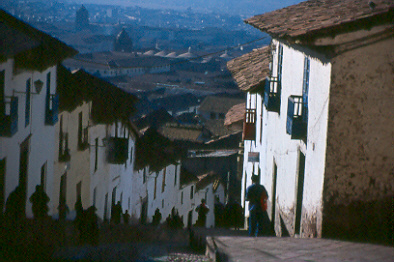
San Blas artisans' quarter, Cuzco.
Photo: Walter H. Wust. Machu Picchu Luxury Tours.
A lunch of traditional Andean cuisine by chef Rodolfo Rolando in the patio of Pacha Papa. Just across the street, visit an artisan's workshop and the Church of San Blas (built in 1562). It houses an imposing pulpit from the late 17th century that, for many, is the finest example of a carved wooden structure in the world. Chiseled from a single cedar trunk, the pulpit features angels, demons, saints, virgins and beasts. A native artist, Juan Thomas Tuirutupa, is believed to have been the sculptor. The main altarpiece is Baroque and exceptionally beautiful.
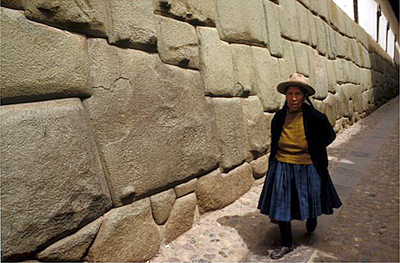
The Stone of Twelve Angles, Cuzco.
Photo: Mylene d'Auriol Stoessel. Machu Picchu Luxury Tours.
The most renowned of the Peruvian temples,
the pride of the capital, and the wonder of the empire, was at Cuzco,
where, under the munificence of successive sovereigns,
it had become so enriched, that it received the name of Coricancha,
or "the Place of Gold."
-- William H. Prescott, The History of the Conquest of Peru, 1847
Afternoon walking tour in the imperial city of the Incas to their ancient monuments, including the Stone of Twelve Angles, Huacaypata (Leisure Square -- now called the Plaza de Armas and dominated by the Spanish colonial Cathedral). the fine Inca walls of Inti Q'ijllo, the Ajlla Wasi (the House of the Virgins of the Sun) and Qorikancha (the Temple of the Sun). All of these constructions date from the era of 1440 A.D., when Inca Pachakuteq, desiring a capital befitting his great empire, pulled down the adobe city and rebuilt Cuzco in stone.
The Inca palaces were in the form of "canchas", or enclosures, formed by massive stone walls with living quarters, temples and courtyards within. Throughout Cuzco, you will see the Inca walls, built upon by the Spaniards in colonial style. The Cathedral was built over the Inca Wiracocha's palace. The Palacio Arzobispal, or Archbishop's Palace, was erected in the 16th century in an Arabesque style on the walls of Hatunrumiyoc, the palace of Inca Sinchi Roca, which contains the Stone of Twelve Angles. The Church of Santo Domingo (begun in 1534), was built over Qorikancha, the most important religious structure in the Inca Empire. When the earthquake of 1950 collapsed much of the superimposed colonial architecture, it revealed the ancient Temples of the Sun, the Moon, the Stars, Thunder and Lightning, and the Rainbow.
The interior of the temple was the most worthy of admiration. It was literally a mine of gold. On the western wall was emblazoned a representation of the deity, consisting of a human countenance, looking forth from amidst innumerable rays of light, which emanated from it in every direction, in the same manner as the sun is often personified with us. The figure was engraved on a massive plate of gold of enormous dimensions, thickly powdered with emeralds and precious stones. It was so situated in front of the great eastern portal, that the rays of the morning sun fell directly upon it at its rising, lighting up the whole apartment with an effulgence that seemed more than natural, and which was reflected back from the golden ornaments with which the walls and ceiling were everywhere incrusted. Gold, in the figurative language of the people, was "the tears wept by the sun," and every part of the interior of the temple glowed with burnished plates and studs of the precious metal. The cornices, which surrounded the walls of the sanctuary, were of the same costly material; and a broad belt or frieze of gold, let into the stonework, encompassed the whole exterior of the edifice.
Adjoining the principal structure were several chapels of smaller dimensions. One of them was consecrated to the Moon, the deity held next in reverence, as the mother of the Incas. Her effigy was delineated in the same manner as that of the Sun, on a vast plate that nearly covered one side of the apartment. But this plate, as well as all the decorations of the building, was of silver, as suited to the pale, silvery light of the beautiful planet. There were three other chapels, one of which was dedicated to the host of Stars, who formed the bright court of the Sister of the Sun; another was consecrated to his dread ministers of vengeance, the Thunder and the Lightning; and a third, to the Rainbow, whose many-colored arch spanned the walls of the edifice with hues almost as radiant as its own...
All the plate, the ornaments, the utensils of every description, appropriated to the uses of religion, were of gold or silver. Twelve immense vases of the latter metal stood on the floor of the great saloon, filled with grain of the Indian corn; the censers for the perfumes, the ewers which held the water for sacrifice, the pipes which conducted it through subterraneous channels into the buildings, the reservoirs that received it, even the agricultural implements used in the gardens of the temple, were all of the same rich materials. The gardens, like those described, belonging to the royal palaces, sparkled with flowers of gold and silver, and various imitations of the vegetable kingdom. Animals, also, were to be found there --among which the llama, with its golden fleece, was most conspicuous-- executed in the same style, and with a degree of skill, which, in this instance, probably, did not surpass the excellence of the material.
-- William H. Prescott, The History of the Conquest of Peru, 1847
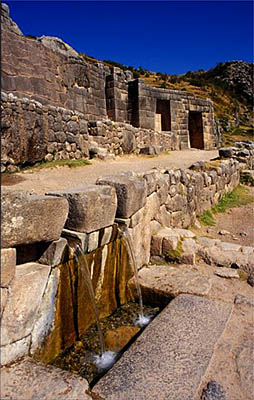
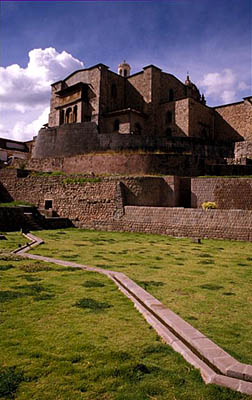
Qorikancha, the Temple
of the Sun, Cuzco.
Photo: Mylene d'Auriol Stoessel. Machu Picchu Luxury Tours..
In the time of the Incas, this garden... was entirely made of gold and silver; and there were similar gardens about all the royal mansions. Here could be seen all sorts of plants, flowers, trees, animals, both small and large, wild and tame, tiny, crawling creatures such as snakes, lizards, and snails, as well as butterflies and birds of every size; each one of these marvels being placed at the spot that best suited the nature of what it represented.
There were a tall corn stalk and another stalk from the grain they call quinoa, as well as other vegetables and fruit trees, the fruits of which were all very faithfully reproduced in gold and silver. There were also, in the house of the Sun, as well as in that of the king, piles of wool made of gold and silver, and large statues of men, women, and children made of the same materials, in addition to storerooms and recipients for storing the grain they called pirua, all of which, together, tended to lend greater splendor and majesty to the house of their god the Sun.
All of these valuable works were made by the goldsmiths attached to the Temple, from the tribute of gold and silver that arrived every year from all the provinces of the Empire, and which was so great that the most modest utensils used in the temple, such as pots and pans, or pitchers, were also made of precious metals. For this reason, the temple and its service quarters were called Coricancha, which means the place of gold.
-- Garcilaso de la Vega, The Royal Commentaries of the Inca, 1609
Return to your hotel.This evening, at the Museo de Arte Precolombino, you will see 450 pre-Inca and Inca masterpieces dating from 1250 B.C. to 1532 A.D. Afterward, dinner of nouvelle Andean cuisine by Manuel Cordova at the Map Café, in the museum's courtyard. Overnight in the Orient-Express Monasterio.
House of the Virgins of the Sun, c. 1500 AD, Pachacamac.
Photo: Mylene d'Auriol Stoessel. Machu Picchu Luxury Tours.
Day 8: Cuzco - Lima
Breakfast. Transfer to the airport for the flight to Lima. Arrival, reception and transfer to your hotel. Morning drive to Pachacamac, the most reknowned pre-Inca and Inca pilgrimage site of the coast, dating back to 200 AD. It was originally devoted to the worship of the earth god Pachacamac: "he who sustains or gives life to the universe". Upon returning to Lima, lunch at the extraordinary Huaca Pucllana restaurant, located on the grounds of a 1,500-year-old adobe pyramid built by the original inhabitants of Lima. The cuisine is a reinterpretation of the Peruvian Criollo tradition by chef Marilú Madueño (Le Cordon Bleu Paris).
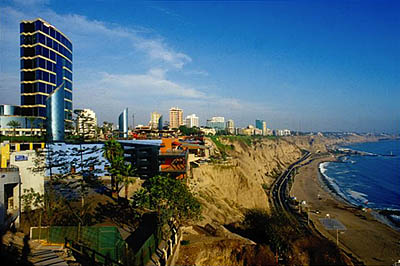
Malecon de la Reserva, above La Costa Verde, Miraflores, Lima.
Photo: Mylene d'Auriol Stoessel. Machu Picchu Luxury Tours.
Afterward, continue to Barranco for a visit to one of the country's finest crafts shops: Mari Solari's Las Pallas. Once Lima's beach resort, this district is now the home of Peru's most prestigious artists and writers. Among its colorful, colonial mansions is the Palacio de Osma, now the Museo de Arte Colonial Pedro de Osma, which focuses on colonial Peruvian art from the country's cultural centers of the day. La Puente de los Suspiros (The Bridge of Sighs) is a romantic outlook over the ocean in the loveliest part of the quarter, said to inspire artists. Next to it is La Iglesia de La Ermita (The Church of the Hermitage), built on the spot where legend has it that a glowing image of Christ appeared to guide sailors home from a tempest at sea. After arrival back at the hotel, have a farewell drink at the bar, order from room service or just rest before the transfer to the airport for your Overnight Flight Home. Relax in the VIP Club while awaiting departure and enjoy a buffet of light fare and beverages, including Peru's famous pisco sour. Day Room in the Orient-Express Miraflores Park.
Day 9: Lima - Home
Flight and arrival home.
© 2013 Inka's Empire Corporation, Machu Picchu Luxury Tours. All rights reserved.